Endymion Revisited
back to projects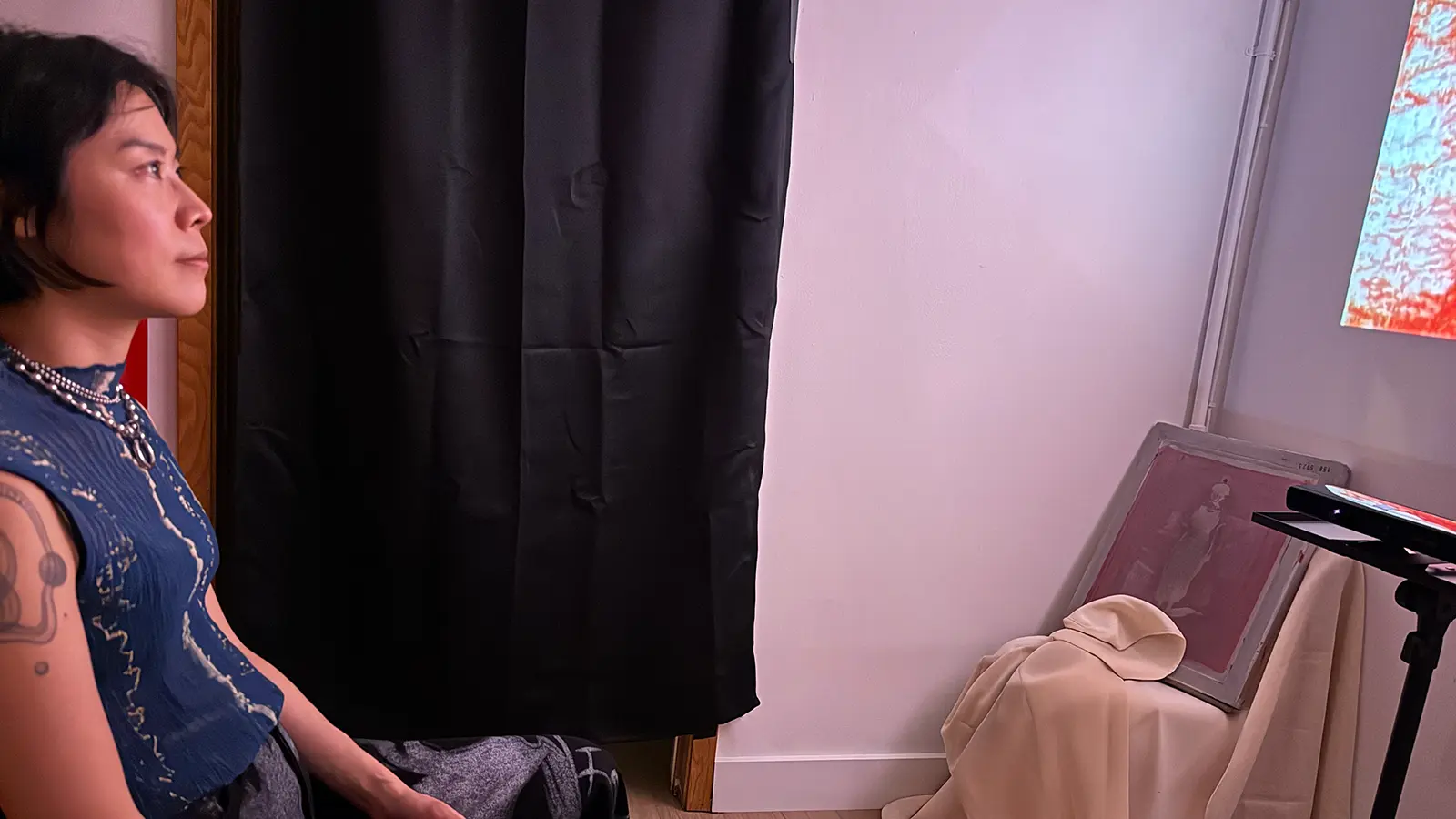
Stillness as Attention
Latest Exhibition
Mon 26 Oct to Sat 31 Oct
noon - 7p, FREE
Cornish 9th Ave Gallery
2014 9th Ave, Seattle WA 98121
artandtechsymposium.com/2026-exhibition
Overview
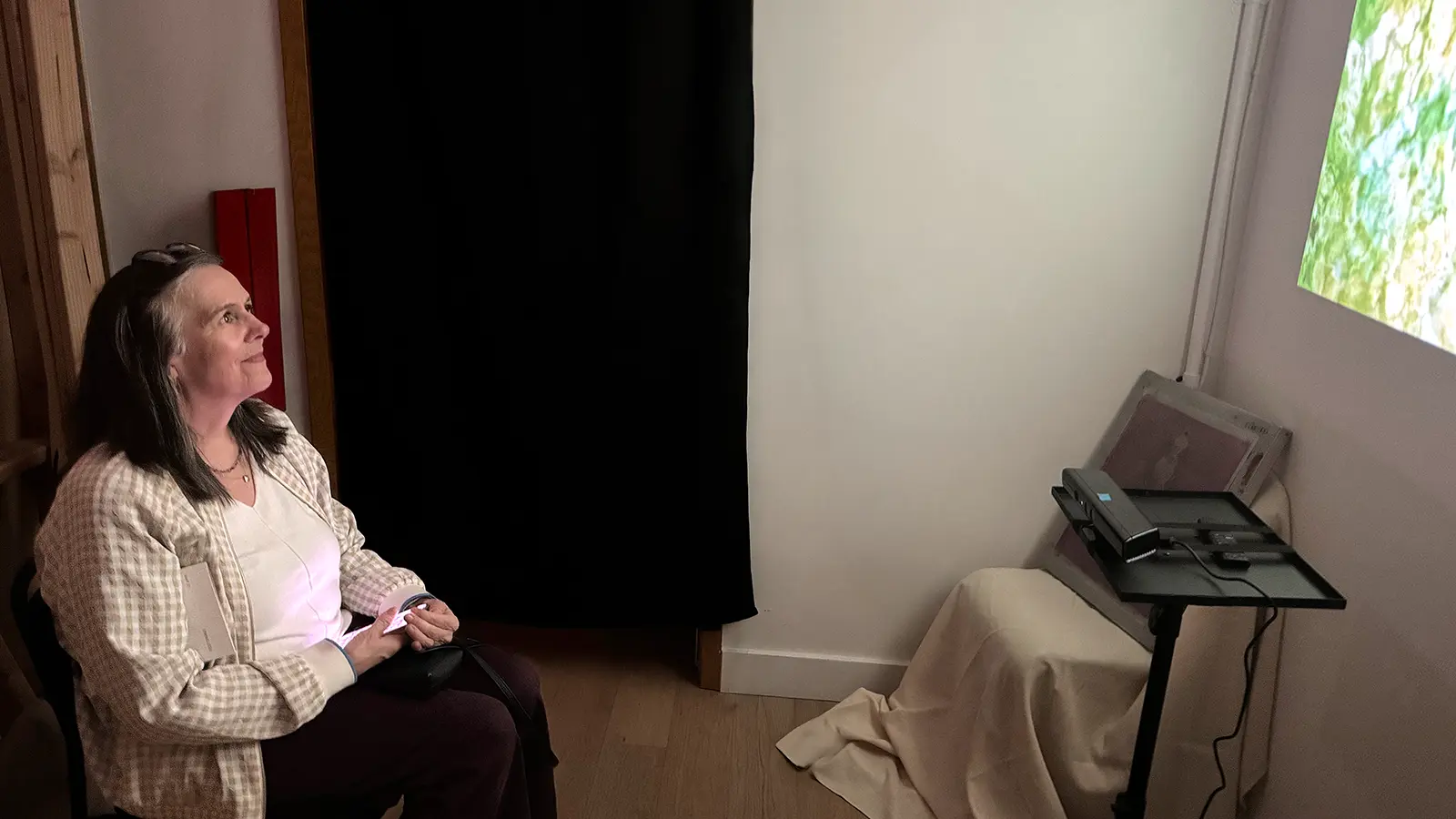
Endymion Revisited asks how an interactive installation can become a mutual circuit in which the viewer's attention shapes the projected images, and in turn the projected image shapes the viewer.
The Myth
In Greek myth, Endymion remains motionless in eternal open-eyed sleep while Selene, goddess of the Moon, descends each night to watch him. Their encounter is defined not by movement, but by the attention of sustained stillness across an unbridgeable distance: one body held motionless, the other committed to a slow and continuous descent.
The Work
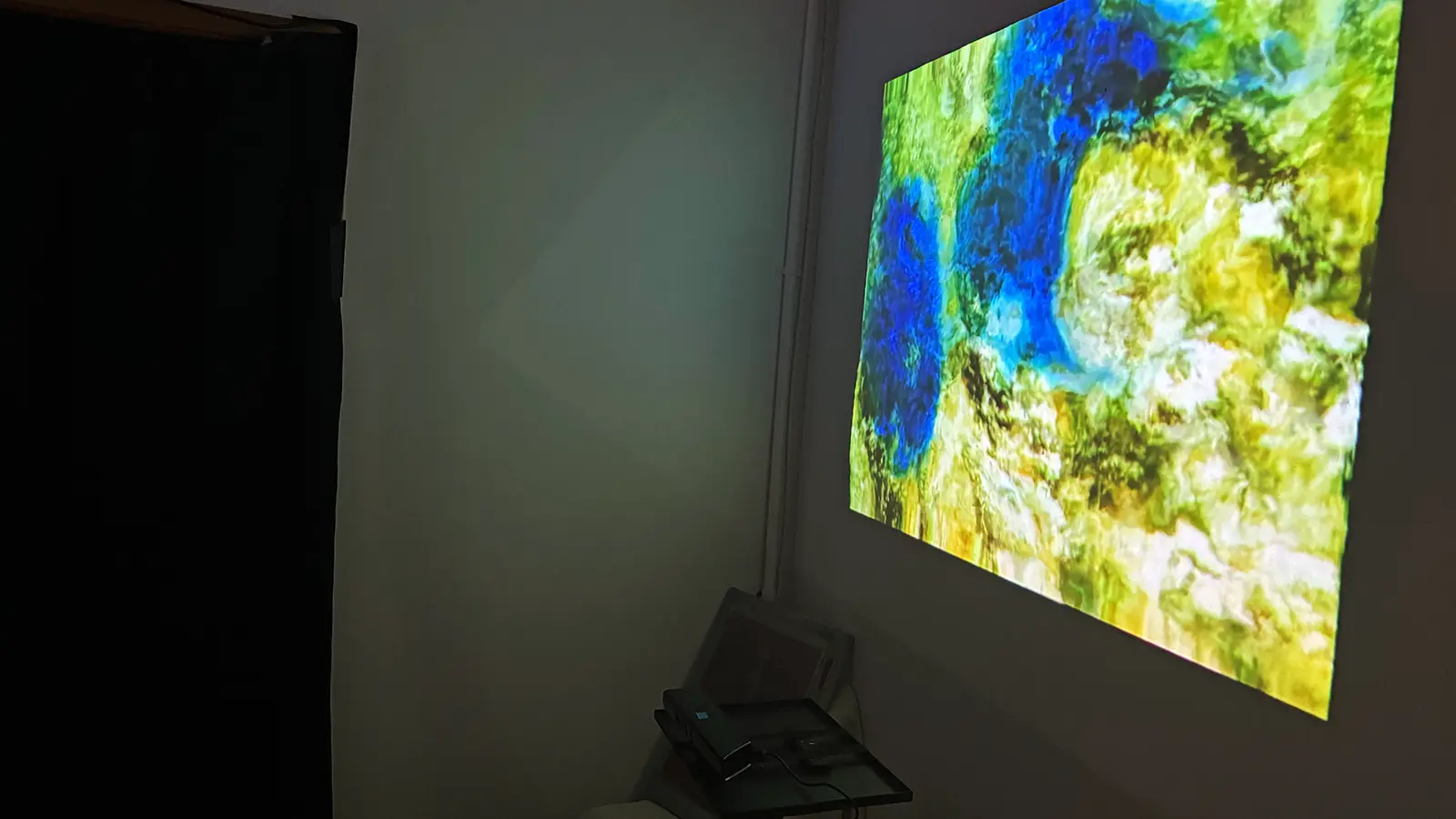
A depth sensor reads the viewer's body in real time. As stillness increases, a projected video responds to make the video plays more brightly - only to darken again when there is movement. Stillness therefore is not a passive condition; it's an active mode of engagement.
Nonhuman Vision
The sensor does not see as a human viewer sees. It registers the body through infrared depth-space: a spatial map outside ordinary perception. Drawing on Joanna Zylinska's concept of nonhuman vision, the encounter is structurally asymmetric. The viewer watches the projection, while the machine watches the viewer in a register that cannot be seen by the human. The gaze is no longer human and divine, as in the myth. Rather, it has shifted to a divide across human and machine vision.
This asymmetry is not incidental, it's the operating principle of the work. Thus the work proposes that machine-involving art should treat the strangeness of machine perception as central to the encounter. If the machine sees differently, then the work must account for that difference as an opening toward the unknown, and toward other forms of potentially alien intelligence.
See it for yourself at GitHub.
Past Exhibitions
Ambient Crafts1928 Pike Pl, Seattle WA 98101
21 May 2026
Context
Endymion sits within a contemporary media art context that values stillness, ambient response, and asymmetric human-machine encounter. The work shows what restrained interaction can achieve where spectacle often cannot. Manuela Naveau, curator of Interface Cultures at the University of Arts Linz, identifies this as a coherent field of practice: attention, embodied presence, and asymmetric human-machine encounter within algorithmic environments.
Technical
| Input | Microsoft Kinect depth sensor — real-time infrared depth-map of the viewer's body. |
|---|---|
| Processing | Presence and stillness detection using frame-differencing on the depth stream. The stillness score controls video playback rate and visual effect parameters. |
| Output | Projected video — slow-film imagery that responds continuously to the viewer's measured degree of stillness. |
| Built with | Python, OpenCV, libfreenect2, Raspberry Pi 5, Kinect v1, Video, Hand-drawn 16mm film |
References
Zylinska, J. (2017). Nonhuman Photography. MIT Press.
Naveau, M. (2025) Interface Cultures, University of Arts Linz. Ars Electronica curatorial programmes.